Thursday, July 15, 2010

Anne Blair Lancaster, Joseph B. Lancaster's sister

In my quest to find photos of people mentioned in letters written by Joseph B. and Amanda D. Lancaster, I have been in contact with the Order of Carmelites, Discalced, to find out information about Anne Blair Lancaster, one of Joseph's older sisters.

Joseph's father and mother, William Blair Lancaster and Josephine Morgan Lancaster had four children -- Mary Catherine (Kate) Lancaster (1859-1928), Anne Blair Lancaster (1861-1915), Mary Edith Lancaster (1862-1938), and Joseph (1865-1916). (William Blair outlived Josephine and married twice more, outliving both Mary Ellen Wells Lancaster and Marie Delery Lancaster, with whom he had children.)

Kate was a schoolteacher and principal her entire life and never married. I am in contact with a librarian at the University of New Orleans where the archives of the Orleans Parish School Board are held. In another blog I will relate the serendipitous way I found out that Kate was the principal of McDonogh 11 in the 1920s.

Anne Blair entered the Order of Carmelites, Discalced and took the name Sister St. Pierre of the Blessed Sacrament, OCD.

Mary Edith married Thomas Wharton Collens, a descendant of the founder of Covington, and had four children with him. I have been in touch with Frances Collins Curtis (note spelling change) about her grandmother, Mary Edith. I will post any information that I receive from Frances.

All that is said to give context to who Anne Blair was. The prioress of the Carmelites in New Orleans, Sister Joan Monkhouse, OCD, sent me an excerpt from the order's Book of Our Deceased Sisters, that gives a beautiful account of Sister St. Pierre's life as a Discalced (barefoot) Carmelite:

Sister St. Pierre of the Blessed Sacrament.

The Heavenly Bridegroom, on Apr. 27, 1915, while the joyous Alleluias were ascending to His throne of love, and during the octave of the Patronage of our glorious Father St. Joseph, came to take another of His brides from our Carmel, to the celestial nuptial feast prepared for her in the mansions of eternal bliss.

Sister St. Pierre of the Blessed Sacrament, nee Anna Blair Lancaster, was in the 55th year of her age, and the 27th of her Religious Profession. She was born Jan. 10, 1861, in New Orleans, La., of pious Christian parents, her Father being William P. Lancaster, and her Mother Josephine Morgan. She was educated at St. Simeon’s select school, by the Sisters of Charity, and ever showed herself deeply grateful for the thorough Catholic training she received there.

She was a very pious child, and at an early age she heard the Divine Master calling her to a life of detachment from all that passes away and of union with Him, which she would find in the holy solitude of Carmel. She was directed by a Reverend Jesuit Father, and on May 18, 1885, in the 25th year of her age, her holy desires were realized. Owing to circumstances over which Superiors had no control, she did not receive the holy habit until Oct. 21, 1886. Another sacrifice was asked of her because of the same circumstances, and her longing desires to pronounce her holy vows could not be realized until Nov. 21, 1888.

Before she left the Novitiate, the malady which was ultimately to take her from us, manifested itself; yet through all the intervening years, she worked generously for her community, and kept up to all community exercises with admirable and most edifying fidelity. When her failing strength obliged her to lie down, she either wrote or sewed. She was very orderly and remarkably industrious, considering it contrary to holy poverty to lose a minute.

For a time she was Sacristan, and during her entire Religious life she mended the stockings, a charge which she fulfilled with edifying generosity almost to the last day of her life. Gifted with marked literary ability, she was a valuable help to all her Prioresses, in the correspondence, in which duty she showed much prudence and discretion. She helped greatly with the work of the Holy Face, and manifested much zeal in spreading devotion to Sister Teresa of the Child Jesus and of the Holy Face, “The Little Flower of Jesus,” thus, may we hope, hastening the day of her Beatification.

Sister had a marked devotion to the Blessed Sacrament, and a great love for prayer. When she knelt in the Divine Presence, her face was seen visibly to light up, as it were, and she seemed lost in her communings with her Beloved.

Although she had a tender affection for her relatives, yet she manifested a truly supernatural detachment from them, which greatly edified the community.

In May of 1914, our dear Sister’s condition became such as to cause alarm, and she herself realized the end was not far off. Yet she continued to work generously, and to follow community exercises until November of the same year when her heart became weak. For four months longer, she struggled on heroically, keeping up to all the community acts her strength permitted, and working, as ever, incessantly.

In the month of March, 1915, her state became quite serious, although she worked on until her strength failed her utterly. She went to the Choir for Mass the last time, Sunday, Apr. 18th; our Divine Lord was taken to her the following day; and on the next morning, Tuesday, Apr. 20th, she received, in full consciousness and edifying fervor, the Last Sacraments. The plenary indulgence in “Articulo Mortis” was imparted; Holy Viaticum that day was her last Communion. She lingered on for a week longer, and on Tuesday morning, Apr. 27th, at 2 o’clock, her pure soul flew to the bosom of the Divine Spouse for Whom she had given all.

Later in the morning, her holy remains were carried to the Choir, and there exposed until the Requiem Mass the following day. On the evening of Tuesday, the entire Office of the Dead was chanted by the community. The Requiem Mass was sung at 10 o’clock, the Celebrant Rev. Father Cyril, the Deacon, Rev. Father Joseph, and the Sub-deacon, Rev. Father Gabriel, all being Discalced Carmelites. The funeral sermon was preached by our devoted Confessor, Very Rev. Father Columban, O.S.B., who paid a touching tribute to our departed Sister, and urged all present to follow her beautiful example, that they might like her, enjoy a holy and happy death.

After the Last Absolution, her remains were carried to our community tomb in new St. Louis Cemetery. R.I.P.

Sr. Saint Pierre of the Blessed Sacrament – profession, Nov 21, 1888

1888. Profession of Sister St. Pierre of the Blessed Sacrament, choir-sister.--- This Profession was made in the year of our Lord, 1888, on Wednesday the twenty-first of November, at five o’clock A.M., at the Monastery of St. Joseph and St. Teresa of the Discalceated Carmelite Nuns in New Orleans, Louisiana. Secular name: Anne Blair Lancaster; religious name: St. Pierre of the Blessed Sacrament; birth-place: New Orleans, Louisiana; her father’s name: William Blair Lancaster; her mother’s name: Josephine Morgan. In the twenty-sixth year of her age, she received the Holy Habit of Carmel on Thursday the twenty-first of October 1886, and made her Profession under the Most Rev. Archbishop Francis Janssens in the hands of Rev. Mother Teresa of Jesus, Prioress of said Monastery, in the Choir before the Blessed Sacrament, the Community being present. Sister St. Pierre made her Profession in the following words written and signed by herself:

“I, Sister St. Pierre of the Blessed Sacrament, make my Profession and promise Obedience, Chastity and Poverty to God, to the Blessed Virgin Mary of Mount Carmel and to His Grace the Archbishop of New Orleans, the Most Rev. Francis Janssens, and to his successors, representing our Very Rev. Father General of the Congregation of St. Elias of the Discalceated Carmelites, according to the Primitive Rule of the Order, without mitigation until death. I, moreover, do make the Vow of Humility, and promise never directly or indirectly, by myself or by another, to seek for any dignity or office in the Congregation, as is prohibited by our Constitutions. (signed) Sister St. Pierre of the Blessed Sacrament.”

The said sister made her Profession when she was in the 28th year of her age.

(signed) Sr. Teresa of Jesus, Prioress, D. C.

Note at end of page: Sr. St. Pierre of the Blessed Sacrament died April 27, 1915.


It is worth noting that three other sisters of Joseph B. Lancaster became nuns. William Blair Lancaster and Mary Ellen Wells had five children: Laura and Marie (Maisey), both of whom died in childhood in the 1870s; William Blair Lancaster Jr. (Willie, 1873-1925), who was married and had three children; Mary Ellen (Nellie) Lancaster (1876-1954), who entered the Daughters of Charity and took the name Sister Apolline; John Robert Lancaster (1879-1945), who was married briefly but had no children.

William Blair Lancaster and Marie Delery Lancaster had five children: Elizabeth Lancaster (1887-1980), who never married; Cecilia (Celie) Lancaster (1890-1977), who entered the Daughters of Charity and took the name Sister Mary Austin; Armantine (Tena) Lancaster (1892-1986), who entered the Daughters of Charity and took the name Sister Vincentine; Armand Delery Lancaster (1894-1968) who married Katherine Denechaud and had five children; John Lancaster (1895), who died at birth.

Monday, July 5, 2010

A Wedding Story


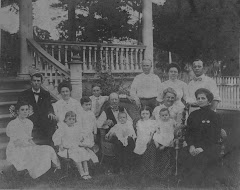
Despite the time that has transpired since the last post, I have continued to conduct research and contact family members, even those that are more than two degrees separated from Joseph B. and Amanda D. Lancaster. One such contact has been with Linda "Burger" Allenburger Vaughan and her brother, Alex Allenburger, the children of Louise Aubert Allenburger and Christian Allenburger, my namesake. They are the grandchildren of Robert Aubert and Bertha "Nan" Doerr Aubert, who many of us know as Uncle Bob and Nan (above, circa 1909).

Both Burger and Alex are very interested in Lancaster family research and will contribute images to Now and Always. Here, in Burger's words, is the story of Nan and Uncle Bob's wedding.

GRANDMOTHER AND GRANDPA’S WEDDING STORY

About 30 years ago my mother, Louise Aubert Allenburger, and my aunt, Marie Aubert Bailey, told me the story of my grandparent’s wedding. They heard the story when they were young girls while eavesdropping during the visit of old maid aunts to their home. Their mother (about whom the story was told) tried to quiet the old ladies but to no avail. This is what was revealed.

Grandmother (Bertha) Aubert had dated Julian Smith for several years before they were to be married in 1906. Julian had purchased part of the square in Covington owned by Great-grandmother Doerr and had built a house for my grandmother right next door to her mother. The day before the wedding, Grandmother and her bridesmaid, Flossie, drove the carriage to the bank in Covington to get money for Grandmother’s wedding trip. While in the bank, the teller, Robbie Aubert, told Grandmother, “Bertha, you cannot marry Julian!” Grandmother replied, “Robbie, I have to.” (Apparently, Bertha and Robbie had met at several parties and liked each other.) So, Bertha and Flossie returned home. Flossie went into the house and, while Grandmother was tying up the horse, a carriage with sides (a cab) came barreling down the street. A boy jumped out and said to Grandmother, “Bertha, Robbie says to get in and come with me.” So, Bertha got in, they picked up Robbie at the bank, and Bertha and Robbie drove to Mandeville and were married that day at David’s Grocery Store. They were married for 60 years. Robbie lived to be 89 years old and Bertha died at the age of 99.

Editor’s Note: The boy was Robbie Aubert’s cousin, Henry Gautreaux, who became a physician and delivered Edith Lancaster Garcia nine years later.

Julian Smith married Rachel Linton. Their daughter Virginia became Edith Lancaster Garcia’s best friend. They often played tennis across the street from Julian and Rachel’s house – the house built and intended for Bertha Aubert. Julian’s brother, Deed Smith, was a very close friend of Joseph B. Lancaster. Deed and Julian are frequently mentioned in the letters written by Joseph B. Lancaster and Amanda Doerr Lancaster.

Tuesday, October 20, 2009

More Groundbreaking News

The St. Tammany Parish School Board has given me permission to publish items from its website about the groundbreaking for the Joseph B. Lancaster Elementary School.
Here are images of the design, including a 3-D rendering of the plan:


The groundbreaking:


The article from the school board website describing the groundbreaking:

Groundbreaking Ceremonies Held For Lancaster Elementary
(10-16-2009)
School System officials and members of the Joseph B. Lancaster family took part in ceremonies to break ground for the new Lancaster Elementary west of Madisonville Friday morning, October 16. The new school, located between Pine Creek Drive and Perrilloux Road off Hwy. 22, will bring 47 additional classrooms to the fast growing southwest St. Tammany area.

Lancaster was the first officially-recorded superintendent of the St. Tammany Parish Public School System and was known for his vision of an educational system designed to meet the needs of a growing area. A number of Lancaster ancestors, some from out-of-state, attended the groundbreaking.

Gasaway-Gasaway-Bankston of Hammond is serving as architect for the project, with Donahue-Favret Contractors building the $18.3 million facility. The total square footage of the two-story building will be 104,814. The new school’s grade configuration will be grades two through five.

The event took place two weeks after the groundbreaking ceremonies for a new elementary school in the Slidell area, the Henry Mayfield Elementary off U.S. 190 near Tammany Trace.

The School Board agreed last year to name the new Madisonville area elementary school in honor of Lancaster after Superintendent Gayle Sloan recommended him for the honor. She recounted his many contributions to the community as lawyer, district attorney, judge, and state representative. “He was a very high-achieving individual,” she said. He was named Superintendent by the first School Board in September of 1900, after it became an organized set of schools with parishwide administrative supervision and community governance.

Five descendants of Lancaster attended last year’s School Board meeting to name the school after their ancestor, including Lancaster's grandson, Judge Peter Garcia of the 22nd Judicial District. “Lancaster was a grandson of General David Bannister Morgan, who fought in the war of 1812 with Andrew Jackson and who is buried in Madisonville. So it is appropriate to name a Madisonville area school after him, since he has very strong connections to the Madisonville community,” Judge Garcia said.

Lancaster served as Superintendent of Schools until September, 1904, and died in 1916 in Franklinton.

Sunday, October 18, 2009

Groundbreaking of Joseph B. Lancaster Elementary School, Madisonville, La.

In recognition of Joseph B. Lancaster's contributions to public education in St. Tammany Parish, the School Board voted to name the newest school in the parish for our ancestor.

The groundbreaking was held Friday, October 16, 2009.

See the article from the Times-Picayune describing the event and the photos taken there.

The following descendants of Joseph B. Lancaster attended the event (in parentheses is the familial connection to Joseph B. Lancaster):

Joseph B. Lancaster, who many of us know as Bradford Junior (grandson, as son of Joseph B. Lancaster, Jr. -- Uncle Bradford)
Willie Mae Lancaster (granddaughter-in-law, wife of Bradford Junior)
Marcy Lancaster Simoneaux (granddaughter, as daughter of Joseph B. Lancaster, Jr. -- Uncle Bradford)
Frank Simoneaux (grandson-in-law, husband of Marcy)
Charles D. Lancaster Jr. (grandson, as son of Charles D. Lancaster -- Uncle Charlie)
Dee Dee Lancaster (great granddaughter, daughter of Charles D. Lancaster Jr.)
Charles D. Lancaster III (great grandson, son of Charles D. Lancaster Jr.)
William B. Lancaster (grandson, as son of Charles D. Lancaster -- Uncle Charlie)
Edith Garcia Eason (granddaughter, as daughter of Edith Lancaster Garcia -- Aunt Edie)
Melie Garcia Freret (granddaughter, as daughter of Edith Lancaster Garcia -- Aunt Edie)
Michelle Prather Freret (great granddaughter, daughter of Melie Garcia Freret)
Suzanne Freret (great granddaughter, daughter of Melie Garcia Freret)
Yvonne Garcia Crawford (granddaughter, as daughter of Edith Lancaster Garcia -- Aunt Edie)
John Crawford (grandson-in-law, husband of Yvonne)
Peter J. Garcia (grandson, as son of Edith Lancaster Garcia -- Aunt Edie)
Linda P. Garcia (granddaughter-in-law, wife of Peter)
Meghan Garcia (greatgranddaughter, daughter of Peter and Linda Garcia)
Elizabeth Garcia Smith (granddaughter, as daughter of Edith Lancaster Garcia -- Aunt Edie)
Dale Smith (grandson-in-law, husband of Elizabeth)

Here is a picture taken after the groundbreaking at the School Board facilities, where the family was invited for lunch.


[Photo courtesy of Margaret Sharp, St. Tammany Parish Schools]

Tuesday, September 1, 2009

Two Items of Interest

First Item of Interest

In searching for the Morgan connection to Chief Justice Roger B. Taney, I discovered a Lancaster connection. We have a common ancestor, Robert Brooke. (I imagine if you go back far enough, you can find that with just about anyone.) Taney was the son of Michael V. Taney V and Monica Brooke. Monica Brooke's father, grandfather, and great-grandfather were all named Roger Brooke. Roger Brooke the great-grandfather (1637-1700) married Dorothy Neale (1646-1680). The Neale name arises in our ancestry, too, but that isn't the immediate connection. Roger Brooke's parents were Robert Brooke (1602-1655), a colonial governor of the Maryland colony, and Mary Mainwaring (1610-1663). They married on May 11, 1635, one year after the death of Robert Brooke's first wife, Mary Baker (1607-1634). Robert Brooke and Mary Baker are our ancestors. Their son, Baker Brooke (1628-1679) married Anne Calvert (yes, a descendant of the founder of Maryland; 1644-1714). Their daughter, Mary Brooke (1680-1763), married Raphael Neale (1683-1743). Their daughter, Elizabeth Neale (1704-1762) married Captain John Lancaster (1673-1760). Their son, Raphael Lancaster (1732-1802), married Ellinor (Eleanor ?) Bradford (1735-1802). Their son, John Lancaster (1766-1838), married Catherine Miles (1772-1847). They had twelve kids. Their eldest, Joseph B. Lancaster (1790-1856), was our grandfather's grandfather.

It is worth noting that the Taney-Brooke family stayed in Maryland through all of the births and deaths listed above. (That is, after Robert Brooke moved to Maryland at the behest of Lord Baltimore to command a new county, Charles County. Robert Brooke's first wife -- our ancestor -- had died in England. His second wife and all of his children and servants -- 40 in all -- sailed to Maryland in 1650 [source: Pennsylvania Society of Colonial Governors, Volume 1, copyright 1916, accessed through Google Books.com.])

In the same span of time, our branch of the family closely parallels the history of our country after Independence. Raphael Lancaster moved with his family to Bardstown, Kentucky, as part of the massive migration of white settlers to what was then called the West -- the trans-Appalachian region settled after the Revolutionary War. His son John was captured by Indians. Read the account in the old family history that Bradford Lancaster and Edith Lancaster Garcia prepared for the 1976 reunion in Covington. That capture, too, is reflective of our nation's history as Indians in the Ohio Valley opposed white settlement and fought it until the Indians were driven out by war, disease, and forced migration.

John's son, Joseph B. Lancaster, led a company of Kentucky calvary intent on fighting the British in the War of 1812 in the Great Lakes theater. By the time the company arrived in Detroit, the war had ended. As noted in the recent blog entry, Joseph and his family moved to Florida from Kentucky, perhaps at the urging of a friend from Bardstown, William Pope Duval. A more encompassing reason may have been why many Kentuckians and Tennesseans moved to Florida -- General Andrew Jackson became military governor there after Florida became part of the U.S. Later, Joseph B. Lancaster fought against the Seminole Indians. He was wounded in the neck and retired to the less dangerous combat of politics.

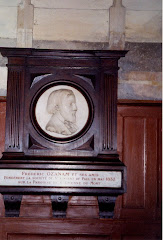
William B. Lancaster, Joseph's son, is responsible for the Louisiana origins of the Lancasters. He had moved with his family to Florida from Kentucky, attended school at St. Joseph's in Bardstown then the University of Paris where he was converted to Catholicism by Frederick Ozanam. As many of our family know, William brought the Society of St. Vincent de Paul to Louisiana, where he organized a branch in New Orleans. His reasons for coming to Louisiana may be related to his work for the Society. Please see the plaque to Ozanam posted here that is in the church adjacent to the University of Paris, St. Etienne du Mont. The plaque is on a wall perpendicular to a side altar dedicated to St. Vincent de Paul. The photo was taken by a French woman as a favor to my sister, Edith Garcia Eason. Were it not for Ozanam, might we have all grown up in Florida?

Second Item of Interest

While looking up some of the above information, I found that the wife of Joseph B. Lancaster (our great-great-grandfather, not our grandfather), Ann Blair Lancaster, is buried at Arlington National Cemetery. She was living in Washington, D.C., at the time of her death in 1890. Burial there was due to her husband's service in two wars. Also buried in Arlington is William B. Lancaster's sister, Laura Louise Lancaster Vincent. As the 1976 history records, she was also converted to Catholicism and studied at the University of Paris. She married U.S. Army Lieutenant Thomas M. Vincent, who served as assistant adjutant general during the Civil War on the Union side. The fact that his brother-in-law, William B. Lancaster, was a member of the medical corps of the trans-Mississippi department of the Confederate Army is another specific example from our family of a larger historical trend, this one of how families were split by the Civil War. Vincent had become a brigadier general before his death in 1909. He is also buried in Arlington. He and his wife are in section Z -- she in 175LH, he in 175RH. I intend to contact Arlington National Cemetery's Freedom of Information officer to find out where Ann Blair Lancaster is buried.

Thursday, August 27, 2009

As promised, here is a speculative musing by Peter Garcia on the relationship of Andrew Jackson to the Lancaster family:

When Judge Sonia Sotomayor was appointed by President Obama, there was an article in The New Yorker about the evolution of choices of Supreme Court justices. At one time, the President made appointments that had a geographical basis. The appointments to the Supreme Court later evolved to have ideological foundations and, lately, gender and ethnic considerations.

The author wrote that in 1836 Andrew Jackson appointed Roger Taney to the Supreme Court, making Taney the first Roman Catholic justice. I had remembered that our family is related to Taney, through General David B. Morgan, our grandfather's grandfather (David B. Morgan's daughter was Joseph B. Lancaster's mother). I wondered about the relationship between Jackson and Taney: Were they connected through Morgan? Jackson and Morgan were fellow defenders of New Orleans during the War of 1812. Who introduced Jackson to Taney? Did Taney come to have a seat on the Supreme Court of the United States because he was related to our great-great grandfather?


Peter refers to the June 8, 2009 article by Jeffrey Toobin entitled, "Diverse Opinions." If anyone finds more information about this topic, please submit it! Meanwhile, I will research the issue, too.

Monday, June 15, 2009

JOSEPH B. LANCASTER, "The comfort and pride of his family"
Joseph B. Lancaster (father of William B. Lancaster and grandfather of Joseph B. Lancaster of Covington, Louisiana) was a member of the Supreme Court of Florida. His career is described in The Supreme Court of Florida and its Predecessors Courts, 1821-1917, published by University Press of Florida in 1998.
Born in Kentucky around 1790, Joseph B. Lancaster was the son of John and Catherine Miles Lancaster. He read law and won admission to the Kentucky bar. He practiced from offices in Bardstown and Lebanon. In 1815, he married Annie Blair, the daughter of a Presbyterian minister. They moved from their hometown of Bardstown to St. Augustine, Florida, in 1822. The book speculates that Joseph's connections to a Bardstown friend, William Pope DuVal, brought him to Florida. DuVal became territorial governor of Florida that year. He appointed Joseph to become assistant secretary of East Florida's board of land commissioners. In 1825, Joseph was admitted to the bar of the the territorial court of appeals and appointed to the legislative council.
Joseph had other connections in Florida that smoothed his way in territorial politics. As time passed, his appointments and elections brought him greater responsibility through much of eastern and central Florida:
1826 -- appointed justice of the peace of St. Johns County (St. Augustine)
1827 -- appointed judge of Aluchua County (Gainesville)
1831 -- President Jackson appointed him the first collector of the Port of St. Johns in Jacksonsville
1833 -- elected chief clerk of the territorial council, the governing body of Florida
1839 -- elected by Duval County (Jacksonville) to the territorial house; served in 1840, 1842, 1843, and 1844. During the last two years, he presided over the house
1846 -- elected mayor of Jacksonville
1847 -- elected to the territorial house of representatives; the Whig majority elected him speaker of the house; his son, William B. Lancaster, was chosen as chief clerk. A resolution directed lawmakers to wear red roses on their left shoulders and christened the house chamber as the "House of Lancaster."
December 1847 -- elected judge of Florida's southern circuit; by right of law he sat on the Florida supreme court until 1850. Joseph continued to serve as circuit judge until 1852. His political enemies feared he would be a "political judge," but one opponent described him "as unswerving, impartial, prompt, discriminating and sagacious a Judge as he was conceded to have been as Speaker."
1853 -- lost reelection in Florida's first popular judicial election (previous elections were held in the house)
As a member of the Whig Party, Joseph lost power as the Whig Party drew its last breath in the state elections of 1852. He joined the American or Know Nothing Party although he rejected two well-known tenets of the party -- anti-Catholicism and anti-immigration. In February 1856, he ran and won the first election for mayor of Tampa. Joseph died November 25, 1856.
Ossian Bingley Hart, a future justice and governor of Florida, was Joseph's protege. After Joseph's death, Hart summarized his mentor's career in the Tampa Florida Peninsular: "Blest with a high order of intellects, with a heart full of kindly feelings, he was the comfort and pride of his family, the ornament of every social circle in which he mingled, and was eminently useful to the people of our State. As a lawyer few were his equals in point of talent, and in fidelity to those whose interests were in his hands; and, as a Judge, none more anxious that justice should be done. To say that he had none of the frailties of human nature, would be to call him perfect, which no man is, but I think I can truthfully say that he had less of those frailties than most men."
Next post: Andrew Jackson and the Lancasters